

How to Revive a Sourdough Starter (Even After Months in the Fridge)
Quick Answer: A starter that’s sat in the fridge for weeks or months is most likely dormant not dead. Pour off the dark liquid (hooch), move 20g of the cleanest paste to a clean jar, feed it 20g flour and 20g lukewarm water, keep it at 75–82°F, and feed it again every 12 hours. Once it starts rising, feed it each time it peaks. Most starters are doubling again in three or four days. Start over only if you see fuzzy mold, pink or orange or red paste, or a rotten smell.

First, a quick check
Dark liquid, a gray skin, a sharp smell, and no bubbles are all hunger signs, and you can ignore them for now. What you’re looking for is fuzzy mold anywhere in the jar, pink, orange, or red color in the paste itself, or a smell that is rotten rather than sour. Any of those means toss it, sanitize the jar, and start a new one (hopefully from a backup).
What you’ll need
The starter, unbleached, un-bromonated flour (ideally whatever it was raised on), water, a clean jar, and a scale. Our supplies post covers all of it if you’re missing something.
How to revive it
1. Pour off the hooch and lift off the skin. With a healthy starter that you feed regularly, stirring the hooch back in is fine and adds a little sour flavor. A revival is different, because by now that liquid is mostly alcohol and acid and the culture is better off without it. Lift the skin off with a clean spoon and dig down until you reach paste that still looks like starter.
2. Move 20g of the good paste to a clean jar. A small amount of old starter in a lot of fresh flour is what you’re after, and the clean jar lets you leave the acid and the crust behind. The rest is discard. We don’t love throwing food away either, but a revival jar is the wrong one to rescue, since what’s left in there is sour in the bad way. Once the starter is healthy again your discard goes back to being pancakes and crackers and something to hand a neighbor.
3. Feed it 20g flour and 20g lukewarm water. Use filtered water if you have it, especially if your tap is heavily chlorinated. Lukewarm here means around 80°F, which feels barely warm on your fingers and nowhere near hot. Stir until no dry flour is left and the texture is like thick pancake batter. Mark the jar at the level of the starter so you can watch it move. A rubber band does this job perfectly well.
4. Keep it warm. Most slow revivals we hear about come down to this step. Your starter wants 75–82°F (24–28°C), which is what we call the Goldilocks Zone. A kitchen counter in October is often more like 65–70°F, and a weak starter at that temperature can take a lot longer to come back than it needs to.
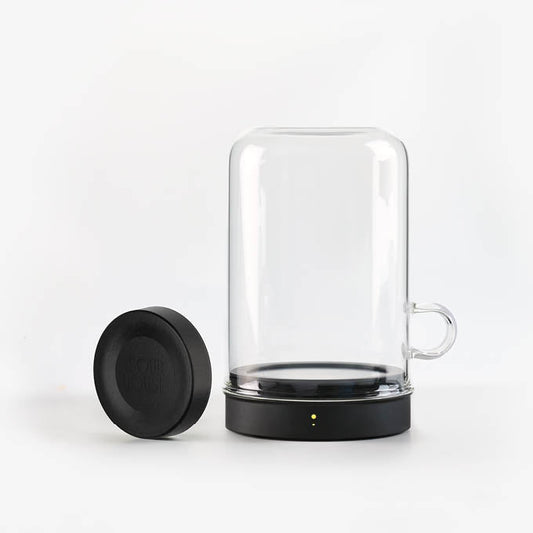
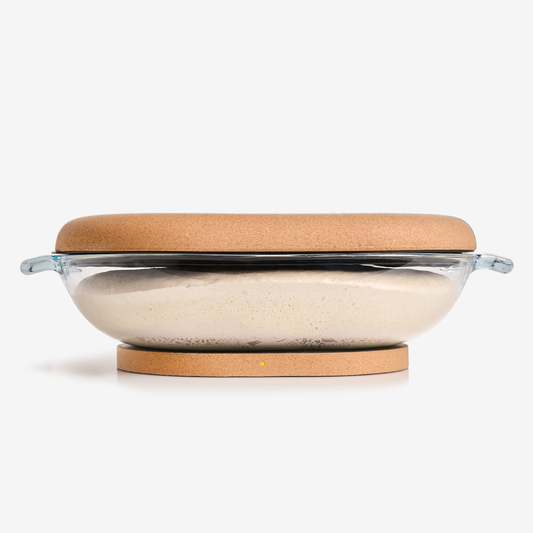
You don’t need anything of ours to do this. The top of the fridge, an oven with the light on and the heat off, a seedling mat, a cooler with a jar of warm water next to it. Bakers have been improvising warm spots for a very long time, and they work. What Goldie does is hold the range for you so you can stop thinking about it.
5. Feed it again in 12 hours. Discard down to about 20g, add 20g flour and 20g water, and put it back in the warm spot. On day one you might see a few bubbles, or you might see nothing at all, and both are normal.
6. Once it’s rising, stop feeding by the clock. When the starter climbs well above your mark and forms a dome, switch to feeding it each time it peaks. Peak-to-peak feeding is the fastest way we know to rebuild a weak starter, and we’ve written up how to read the peak and which ratios to use in its own post. You don’t have to catch the exact minute. Close is good enough, and it’s how most of us do it.
| When | What to do | What you might see |
| Day one | Clean jar, 20g starter, 20g flour, 20g water. Feed again at 12 hours. | Not much. A few bubbles if anything |
| Day two | Keep feeding every 12 hours, keep it warm | Small bubbles, a modest rise, smell turning sour |
| Day three | Switch to peak-to-peak once it domes | A real rise with bubbles through the jar |
| Day four | Test it (below) | Doubling, and a sweet-sour smell |
Treat that table as a compass more than a schedule.
How to know it’s ready to bake
It doubles or more within 4–6 hours of a 1:1:1 feeding in the Goldilocks Zone, or in 6–8 hours at cooler room temperature. It has a domed top and bubbles all the way through. It smells sour and yeasty again.
It doesn’t have to look like the jars on Instagram to make good bread.
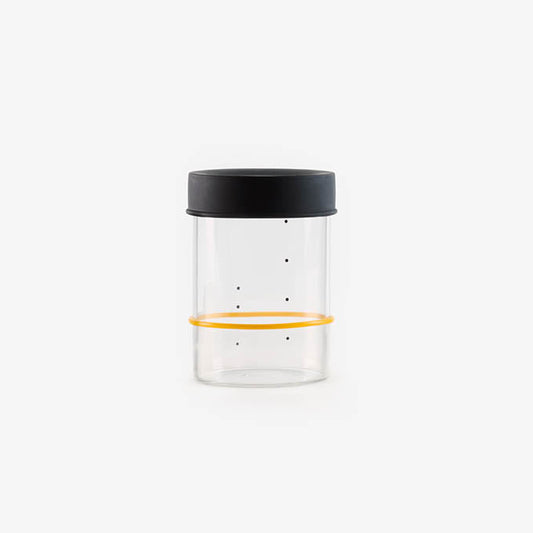
None of this requires buying anything. What shortens a revival is warmth and being able to see what’s happening in the jar, however you get those. If you’d like both handled for you, Goldie and a Starter Jar come together in the Essential Bundle →
The Sourhouse Cookbook is free
Recipes, troubleshooting, and the things we wish someone had told us when we started. We’ll email it to you, along with a discount in case you ever do want one of our tools.
Frequently asked questions
Should I pour off the hooch or stir it in? For a revival, pour it off. For a healthy starter you feed regularly, either works, and stirring it in adds a little sour flavor.
What’s the fastest way to revive a starter? Warmth and peak-to-peak feeding. Hold it at 75–82°F and feed it each time it peaks. That’s usually a three or four day revival. On a cool counter with clock feedings, plan on a week or more.
Can I revive a frozen sourdough starter? Usually. Thaw it in the fridge overnight and follow the steps above. Freezing kills off some of the culture, so expect it to behave like one that sat for months.